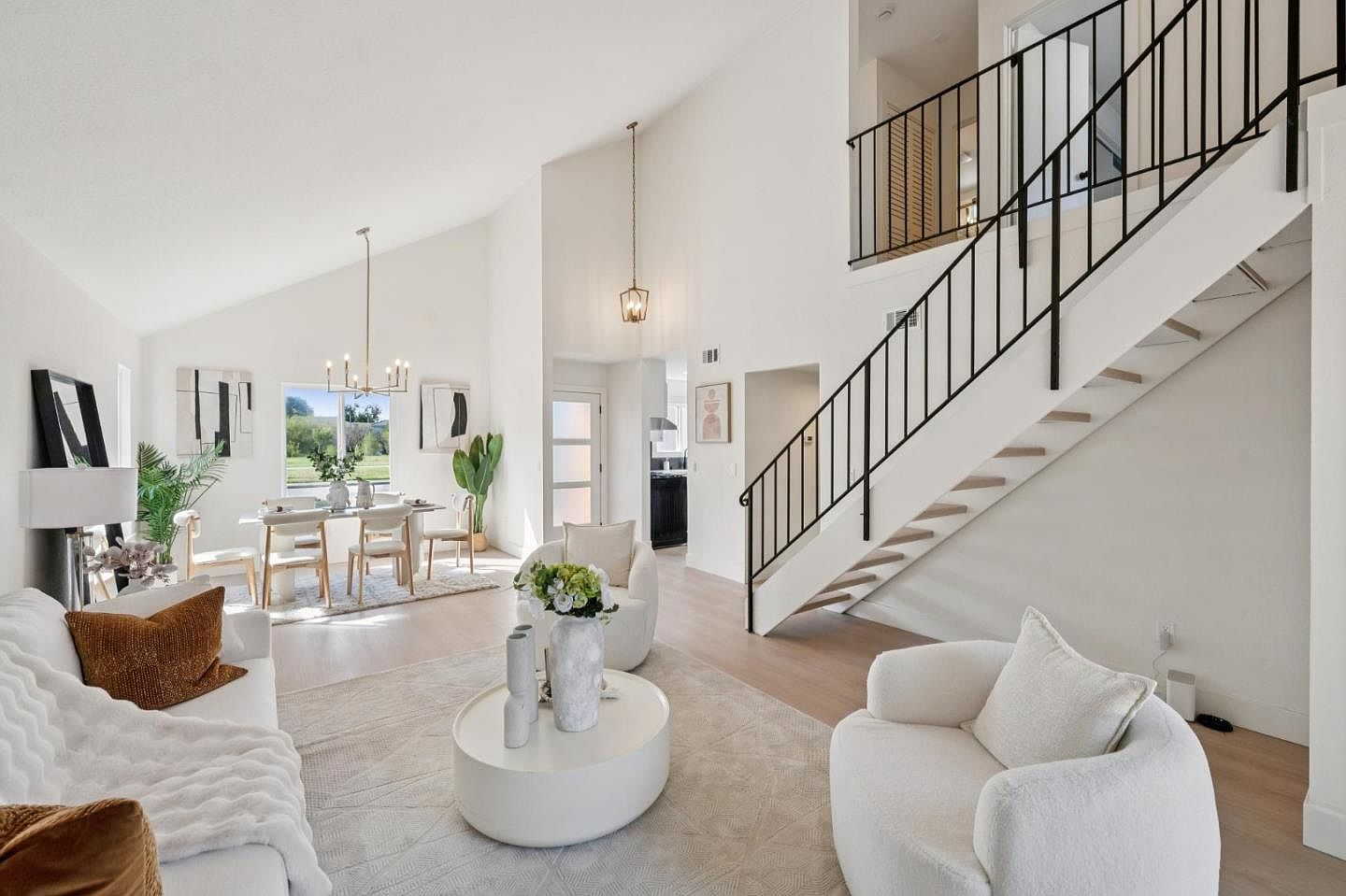
Short answer: the principles don't change, but almost every decision does. Our projects run from homes listed under $1 million to one above $3 million, and from a compact cottage to a house of more than 3,000 square feet on three levels. Here's what actually shifts along that range — and what stays the same no matter what the listing says.
What doesn't change at any price
Three things are constant. You're furnishing for a buyer, not for the person living there. Sightlines matter more than any single piece of furniture. And the photos are the first showing, so the install has to be finished before the photographer arrives.
Everything after that is negotiable.
What changes when the price is lower
At the entry end of the Bay Area market, buyers are usually comparing a handful of similar homes in the same week. The job isn't luxury — it's making the home read as cared-for, current, and ready to move into. Fresh, light, uncluttered beats expensive-looking every time.
In a Petaluma home near the bottom of our price range, that meant an almost entirely white palette warmed with terracotta accents, and furniture chosen to show how a compact footprint actually functions. Nothing in that house was expensive-looking. It was just clear.
What changes when the price is higher
At the top of the range, buyers are comparing against other high-end homes, and they notice incoherence immediately. One room that doesn't match the others reads as a flaw in the house rather than a styling choice. So the bar moves from "attractive" to "consistent" — a palette carried deliberately from the entry through to the last bedroom.
In a Sunnyvale home at the top of our range, that meant a single modern-farmhouse language running the whole way through, with the navy-and-white kitchen as the anchor and nothing fighting it. See that project →
What changes with square footage
Size changes the problem more than price does.
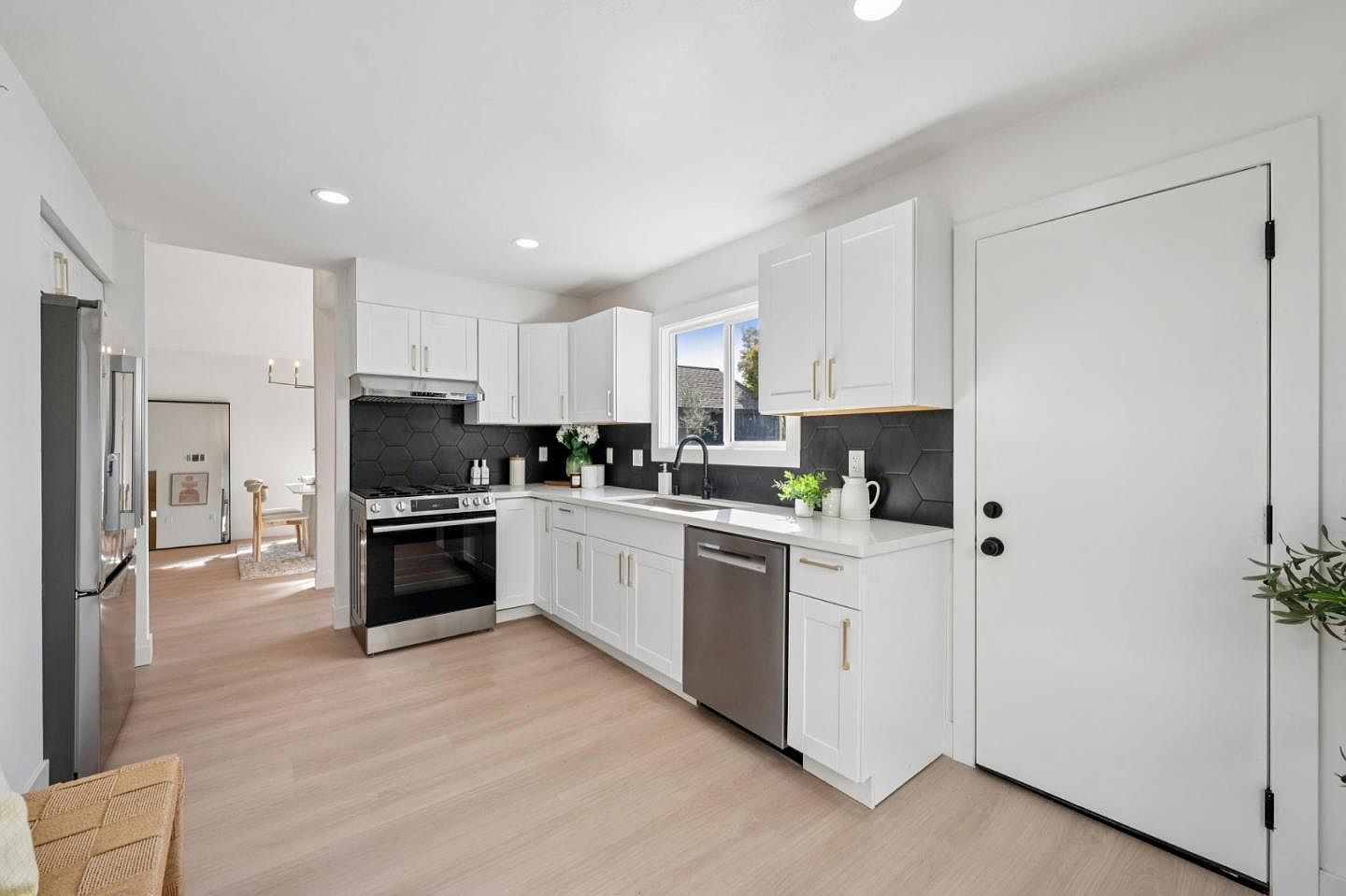
In a small home, every piece is load-bearing. One oversized sofa and the whole house feels cramped. The work is scale, clear walkways, furniture on slim legs you can see the floor beneath, and sightlines that carry the eye out of the room rather than stopping at a wall. We staged a compact Saratoga cottage that still had to show a living room, a dining area, bedrooms, and a workspace. The full small-space breakdown →
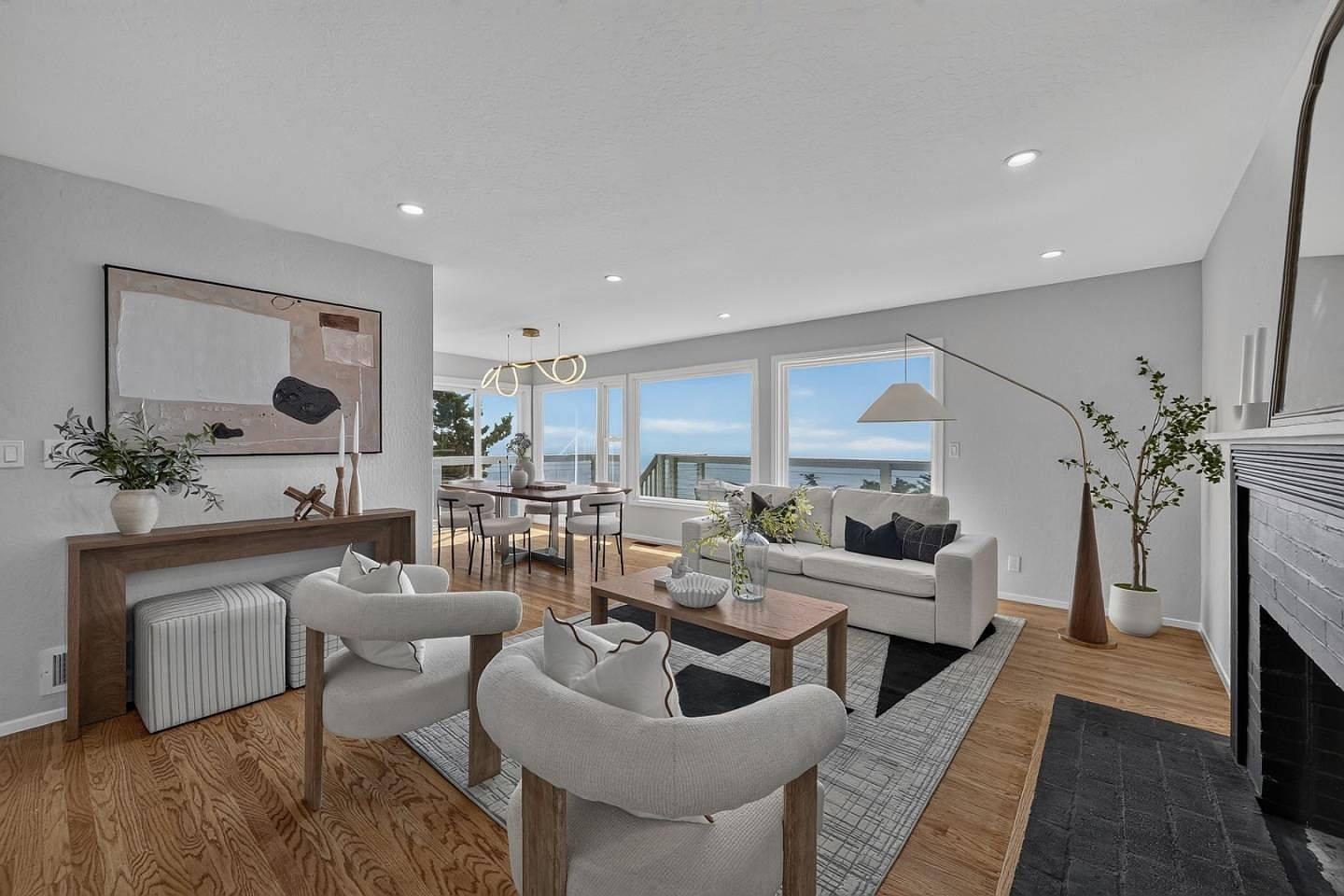
In a large home, the risk is the opposite: sameness. Walk through eight rooms staged from the same three ideas and the house starts to blur. A Daly City home of more than 3,000 square feet across three levels needed each floor to have its own temperature — the main level warm and bright toward the ocean, the lower level cooler and calmer, so the house felt like it had range instead of repeating itself.
How many rooms should I stage in a big house?
Most sources dodge this one. Here's a real answer: stage the rooms that do the convincing, and stop.
- The living room — the first real room on a tour and the lead listing photo.
- The kitchen and dining area — where buyers decide whether the house fits an actual life.
- The primary bedroom — the one room buyers picture themselves in.
- Outdoor space that works as a room — a patio with real seating reads as extra living space.
Partial staging is legitimate and common. One Castro Valley job was deliberately partial — the main living spaces and the primary bedroom only. Spare bedrooms are usually the first thing to cut when the budget is finite, and that's a perfectly sound trade.
Does a newly renovated house still need staging?
Yes, but it's a different job. A renovated home arrives with white walls, new floors and no personality — which sounds ideal and photographs flat. The staging supplies warmth and a sense of scale that empty new finishes don't have on their own.
A recently renovated San Francisco home was all cream and light oak; left bare it would have read as a showroom. Black did the anchoring — an oval coffee table, thin picture frames — and every bedroom was given its own palette so no two read the same. See that project →
And a house that hasn't been updated since the nineties?
This is the situation most sellers are actually in, and it's where staging earns the most.
The instinct with warm, dated finishes — honey oak cabinets, granite counters, red oak floors — is to add more warm, traditional furnishings. That's what makes a house read old. The fix is usually the opposite.
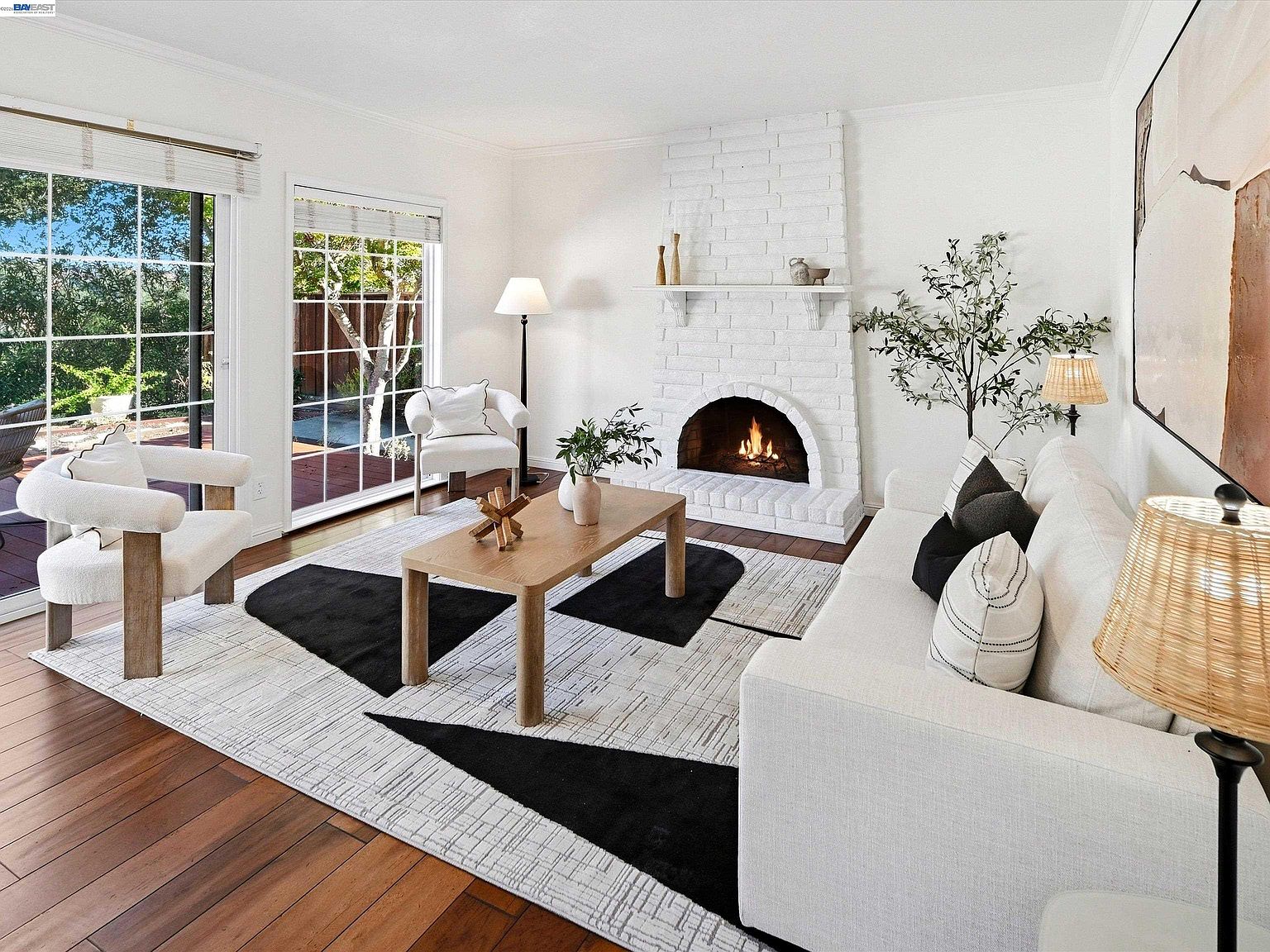
In a Castro Valley ranch with its original nineties interior, the styling went hard the other way: black-and-white geometric art, slim black dining chairs, a graphic rug, against a white curved sofa. The contrast is the trick — against hard modern pieces, red oak stops reading as "dated" and starts reading as "warm." Nothing in that kitchen was replaced.
A Daly City home took the same approach from the other direction: the honey-wood kitchen stayed exactly as it was, and the palette joined it — cream, camel, a little olive — rather than fighting it. See that project →
About the statistics you'll see everywhere
You will read that staged homes sell 73% faster, or for $100,000 over asking. We went looking for the source.
The National Association of Realtors publishes a Profile of Home Staging. The summary of its 2025 edition reports what buyers' agents say: 83% said staging made it easier for a buyer to visualize the property as a future home, and 26% said it had an effect on most buyers' view of the home. That summary publishes no days-on-market, sale-price or return-on-investment figure.
So we're not going to quote one. We'd rather tell you what we can actually show: one San Francisco project we staged was listed at $1,799,000 and sold at $2,310,000. That's a recorded outcome, not a promise — price, timing, location and the agent's strategy all shaped it, and we're not going to claim the furniture did it.
So what does this mean for your house?
If it's at the entry end, the goal is clarity and care, not luxury. If it's at the top, it's consistency. If it's small, it's scale and sightlines. If it's large, it's variation. If it's renovated, it's warmth. If it hasn't been touched since the nineties, it's contrast — and probably not a renovation.
That's the honest version. The rest depends on the house, which is what a walkthrough is for.